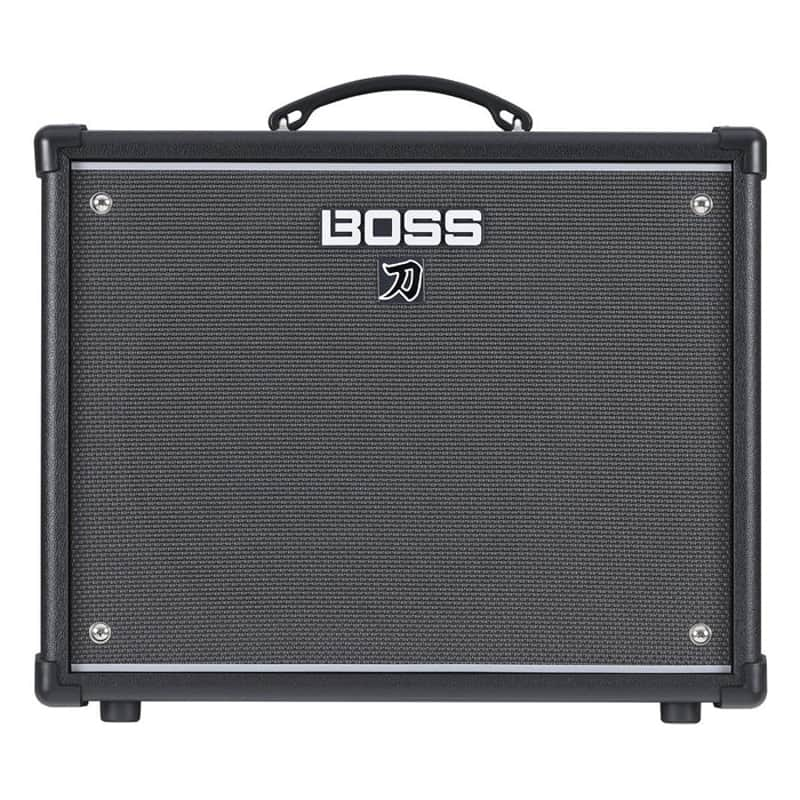
The modern guitar world is packed with practice amps, modeling amps, and hybrid solutions, but very few have reached the level of reputation held by the Katana series. In this detailed review, guitarist Ryan Kuehner takes a deep dive into the latest evolution: the Boss Katana-50 Gen 3.
This amp has become one of the most talked-about practice and recording tools for guitarists because it aims to do something ambitious: deliver professional-level tones, onboard effects, and flexible recording capabilities in a compact, affordable combo amp.
Ryan Kuehner’s goal in this review is simple—find out whether the Katana 50 Gen 3 still lives up to its reputation in 2026, and whether it deserves a place in a modern guitarist’s setup.
First Impressions: Compact but Serious
The first thing Ryan Kuehner noticed about the Katana 50 Gen 3 is how deceptively simple it looks. At first glance, it appears to be a standard 50-watt practice amp with a single 12-inch speaker. But once powered on, it becomes clear that this is not a basic beginner amp.
The control layout is clean and familiar:
- Gain
- Volume
- EQ section
- Five amp character selector
- Built-in effects section
- Master output control
Unlike overly complicated modeling systems, the Katana keeps everything accessible on the surface while hiding deeper customization inside software integration.
Ryan Kuehner describes it as “an amp that feels simple until you realize how deep it actually goes.”
The Katana Philosophy: Simplicity Meets Modeling Power
The Katana series has always been built around a specific idea: give guitarists powerful modeling technology without overwhelming them.
Instead of forcing players into menus and touchscreen interfaces, the Katana 50 Gen 3 relies on:
- Physical knobs
- Clean signal paths
- Amp-style layout
- Optional software editing
This makes it especially appealing for guitarists who prefer traditional amps but still want modern flexibility.
Ryan Kuehner notes that this balance is one of the main reasons Katana amps have remained popular across multiple generations.
Amp Models and Tone Range
One of the most important features of the Katana 50 Gen 3 is its variety of amp voicings. The amp includes multiple character types designed to cover a wide range of styles.
Typical categories include:
- Clean
- Crunch
- Lead
- Brown (high-gain)
- Additional variations depending on mode
Clean Tone Performance
Ryan Kuehner found the clean channel surprisingly rich for a 50-watt combo amp. It has enough headroom for:
- Jazz
- Funk
- Country
- Ambient clean tones
The clean sound remains stable even when pushed at higher volumes.
Crunch and Overdrive
The crunch settings are where the Katana begins to shine for rock players.
Ryan Kuehner tested:
- Classic rock riffs
- Blues-style licks
- Hard rock rhythm tones
The response feels dynamic, meaning picking intensity actually changes how the amp reacts.
This is an important feature because many digital modeling amps struggle to replicate natural tube-like response.
High-Gain “Brown” Channel
The Brown channel is where things get serious.
Inspired by high-gain British-style tones, it delivers:
- Tight distortion
- Strong midrange bite
- Controlled low end
- Excellent sustain
Ryan Kuehner used this setting for:
- Metal rhythm playing
- Lead shredding
- Drop-tuned riffs
The result is impressive for a compact combo amp, especially at this price point.
Built-In Effects: A Full Pedalboard in One Amp
One of the biggest strengths of the Katana 50 Gen 3 is its internal effects system.
Instead of needing multiple pedals, the amp includes a wide range of effects:
- Delay
- Reverb
- Chorus
- Phaser
- Flanger
- Boost
- Wah (via external control options)
Ryan Kuehner notes that while serious pedal users may still prefer external gear, the built-in effects are more than good enough for practice, rehearsal, and even small gigs.
The delays and reverbs stand out in particular for their clarity and depth.
Feel and Responsiveness
One of the most important aspects of any amplifier is how it responds to playing dynamics.
Ryan Kuehner tested the Katana 50 Gen 3 with:
- Soft fingerpicking
- Aggressive picking
- Volume knob roll-offs
- Guitar tone adjustments
The amp responds surprisingly well for a digital modeling system.
It does not feel “flat” or overly compressed, which is a common complaint with lower-end modeling amps.
Instead, it reacts in a way that feels closer to traditional tube behavior.
Guitar Compatibility
The Katana 50 Gen 3 works well with a wide range of guitars:
- Single-coil guitars (Strat-style tones)
- Humbucker guitars (Les Paul-style tones)
- Extended-range guitars
- Active pickups
Ryan Kuehner specifically tested it with high-output humbuckers and found that the amp maintained clarity even under heavy distortion.
That makes it a strong option for modern metal players as well as blues and rock guitarists.
Volume and Speaker Performance
The 12-inch speaker in the Katana 50 Gen 3 is one of its strongest physical features.
At 50 watts, the amp is loud enough for:
- Bedroom practice
- Rehearsals
- Small live venues
- Recording sessions
Ryan Kuehner found that the speaker handles distortion well without becoming muddy or harsh at higher volumes.
Even when pushed, the amp maintains clarity and definition.
Recording Capabilities
One of the most underrated features of the Katana series is its direct recording ability.
The Katana 50 Gen 3 allows guitarists to:
- Record directly into an audio interface
- Use USB output for digital recording
- Capture effects and amp tones without microphones
Ryan Kuehner highlights this as a major advantage for home studio musicians.
Instead of needing:
- Microphones
- Isolation setups
- Complex recording chains
Players can plug in and record immediately.
For modern guitarists working in home studios, this is a major workflow improvement.
Software Integration
While the amp is fully functional on its own, deeper customization is available through Boss Tone Studio software.
This allows players to:
- Edit hidden parameters
- Adjust effects chains
- Fine-tune amp behavior
- Save presets
Ryan Kuehner notes that this is where the Katana becomes significantly more powerful.
However, he also points out that casual users can ignore the software entirely and still get great tones.
That flexibility is one of the amp’s biggest strengths.
Comparison to Other Practice Amps
The Katana 50 Gen 3 competes with several popular modeling amps, including:
- Fender Mustang series
- Positive Grid Spark amps
- Line 6 Spider series
Compared to these, Ryan Kuehner believes the Katana stands out for its:
- More natural tone response
- Better high-gain sounds
- Stronger build quality
- Simpler user interface
Where some competitors focus heavily on app-based control, the Katana keeps things more traditional while still offering modern flexibility.
Strengths of the Katana 50 Gen 3
After extensive testing, Ryan Kuehner identified several clear strengths:
1. Excellent tone variety
Covers clean, crunch, and high-gain styles effectively.
2. Strong built-in effects
Good enough to replace a basic pedalboard.
3. Simple controls
Easy for beginners and practical for professionals.
4. Great volume for its size
Loud enough for rehearsals and small gigs.
5. Reliable recording tool
Excellent for home studio setups.
Weaknesses and Limitations
No amp is perfect, and the Katana 50 Gen 3 has a few limitations:
1. Not a true tube amp
While it simulates tube behavior well, purists may still prefer real valve amps.
2. Limited speaker configuration
A single 12-inch speaker is good but not stereo or full-range.
3. Software dependency for deep editing
Advanced users will need Tone Studio for full control.
Ryan Kuehner notes that none of these are deal-breakers, but they are worth considering depending on your needs.
Who Should Buy the Katana 50 Gen 3?
Ryan Kuehner recommends this amp for:
- Beginner guitarists
- Intermediate players
- Home studio musicians
- Gigging musicians needing a backup amp
- Players wanting all-in-one solutions
It may not be ideal for:
- Tube amp purists
- Professional touring rigs needing high wattage
- Players who rely heavily on external pedalboards
Final Verdict From Ryan Kuehner
After thoroughly testing the Boss Katana-50 Gen 3, Ryan Kuehner concludes that it remains one of the most versatile and practical guitar amps available in its category.
It successfully balances:
- Professional-quality tone
- User-friendly controls
- Built-in effects
- Recording flexibility
- Affordable pricing
While it may not replace high-end tube rigs or advanced modeling systems, it absolutely excels as a do-it-all practice, recording, and small performance amplifier.
Final Rating
9/10
Conclusion
The Katana 50 Gen 3 continues the legacy of the Katana line by offering serious tone and flexibility in a compact format. For guitarists who want an amp that can handle practice, recording, and live use without complications, Ryan Kuehner believes this is still one of the strongest choices on the market in 2026.
It is not just a beginner amp—it is a modern all-in-one solution for guitarists who want great sound without overcomplicating their setup.